
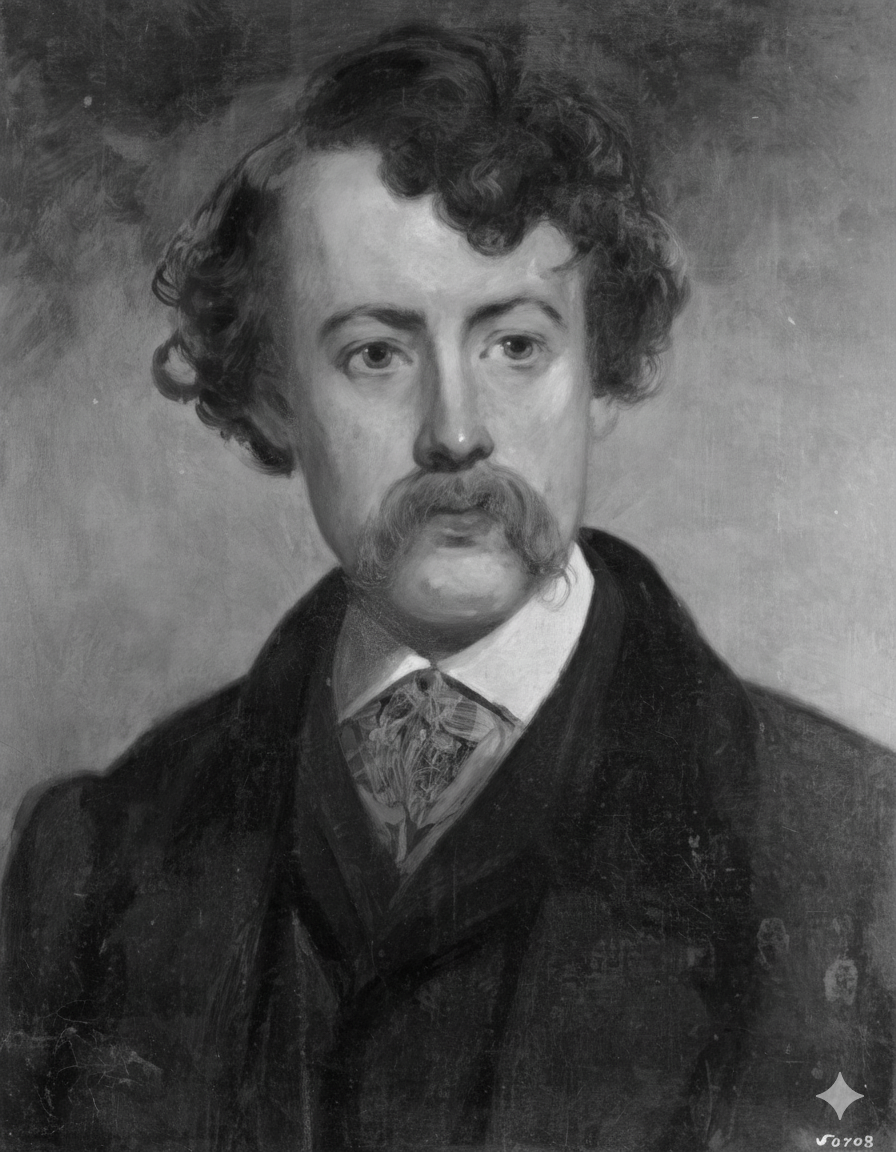
William Stanley Haseltine (1835–1900) was an American landscape and marine painter associated with the second generation of the Hudson River School and the style known as Luminism. Born in Philadelphia, he studied at Harvard and later at the Düsseldorf Academy in Germany, where he honed a disciplined, meticulous drawing technique influenced by his German mentors and the critic John Ruskin. Haseltine was not supported by a single patron but achieved critical success and sustained his career by selling his highly detailed, scientifically precise paintings of the rocky New England coast—such as Narragansett Bay and Rocks at Nahant—and later, his warmly colored, atmospheric views of Italy after moving to Rome in 1869, which include Natural Arch at Capri and Mt. Aetna from Taormina. His style is characterized by intense focus on geological formations, crisp detail, and a remarkable ability to capture clear, radiant light, conveying a sense of serene, monumental nature. Translating a Haseltine to cross stitch captures the quiet majesty of these landscapes; the precise geometry of counted stitching perfectly renders the sharp lines of a craggy cliff face or the ancient stone of a Roman ruin, allowing the stitcher to experience the profound tranquility and timeless detail in his work.
|
22+ Years
Designing Patterns
|
Satisfaction
Guaranteed
|
Family-Owned
Since 2003
|
Loved by Stitchers
Worldwide
|