
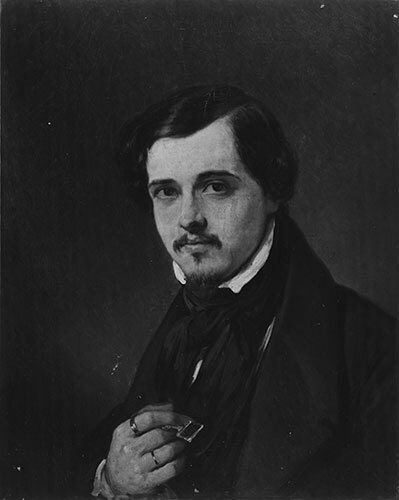
Charles Baugniet was a Belgian powerhouse of the 19th century, starting his career in Brussels before conquering the sophisticated art scenes of London and Paris. While he gained early fame as the official lithographer to the Belgian King, creating hundreds of portraits of the era’s elite, he eventually transitioned into the lush world of oil painting. His move to Paris in 1860 marked a turning point where he became a leading figure in "genre painting," focusing on the intimate, everyday lives of fashionable society women. His work was highly sought after by wealthy patrons who adored his ability to capture the texture of a silk gown or the silent tension of a secret letter. This obsession with tactile detail and the quiet moments of domestic life defines his transition from a master of line to a master of color and atmosphere.
Stitching a Baugniet design is an exercise in pure elegance. You’ll find yourself navigating a sophisticated palette where subtle shifts in cream, ivory, and champagne require a keen eye for color blending. These aren't just blocks of color; they are lessons in light. As you work through the sweeping folds of a satin dress or the delicate lace of a fan, you’ll appreciate how his academic background translates into a hoop-ready masterpiece. The level of detail means you might encounter some intricate confetti in the floral arrangements or the ornate wallpaper backgrounds, but the result is a high-coverage piece that feels like a true heirloom for your stash.
The emotional reward of a Baugniet project lies in the storytelling. Every chart tells a tale of Victorian or Second Empire life—a thoughtful glance in a mirror, a shared confidence between friends, or a quiet moment of reflection. For the stitcher who loves "thread painting," these designs offer the perfect canvas to practice tension control and gridding, ensuring those long, flowing lines of silk and velvet remain smooth. It’s the kind of project that demands a slow-stitch approach, perhaps paired with a favorite tea, as you watch the 14-count Aida transform into a window to the past.
Further Reading & Historical Context To learn more about his prolific career in lithography and his influence on Belgian art, visit the British Museum. You can also explore his portraiture style and thematic range through the archives at Britannica.
|
22+ Years
Designing Patterns
|
Satisfaction
Guaranteed
|
Family-Owned
Since 2003
|
Loved by Stitchers
Worldwide
|