
Cross Stitch Hoops & Frames: Complete Guide | Sunrays Creations
Posted by Tracey Kramer on 24th Mar 2026
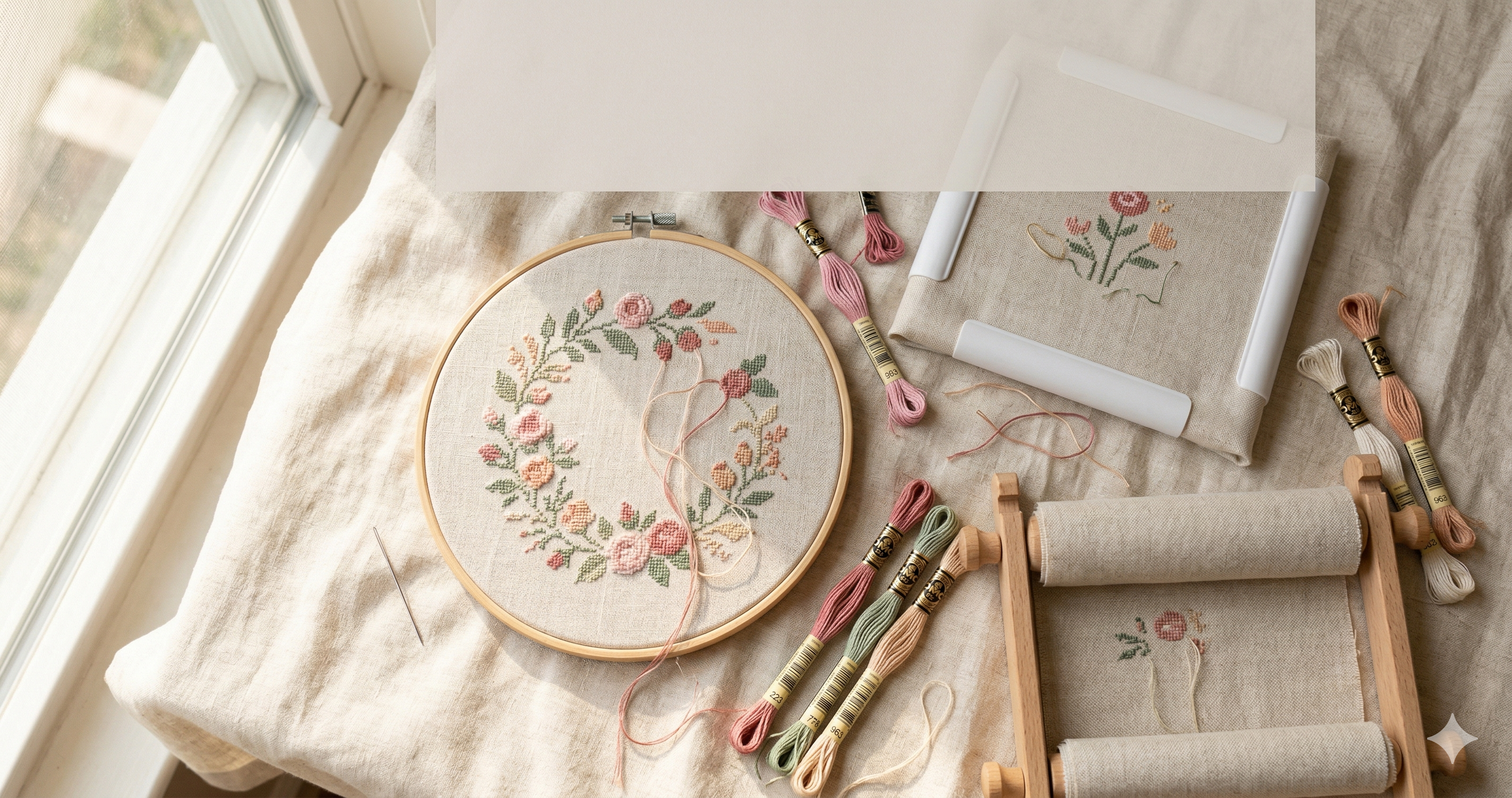
Here's something that trips up almost every stitcher at some point — beginner and seasoned alike. You settle in for a good session, get your hoop set up, and ten minutes later you're battling slipping fabric, uneven tension, or a hoop ring pressing right into the area you just finished stitching. The right hoop or frame changes everything. The wrong one turns a relaxing evening into a wrestling match you didn't sign up for. After years of stitching everything from small floral motifs to massive fine art reproductions on 18-count Aida, I want to walk you through every major type of cross stitch hoop and frame — what each one does well, where it falls short, and exactly which projects each one belongs with. No matter where you are in your stitching journey, this guide will help you spend less time fighting your setup and more time doing what you love.
The Classic Beechwood Embroidery Hoop: The Best Starting Point for Beginners
When most people think of a cross stitch hoop, they picture the classic round wooden hoop — an inner ring and an outer ring with a brass adjustment screw at the top. It's the tool that generations of stitchers learned on, and for good reason. Wooden hoops are affordable, easy to find, and available in sizes ranging from tiny 4-inch hoops all the way up to 12 inches and beyond. For a beginner wondering what size hoop for cross stitch to start with, a 6-inch or 8-inch beechwood hoop is the standard answer — large enough to give comfortable working room, small enough to hold and maneuver easily in one hand.
The quality of the wood matters more than most people realize. Cheap hoops with rough wood or flimsy hardware will frustrate you quickly — the screw strips, the inner ring warps, and the fabric slips no matter how tight you cinch it. Smooth beechwood with a solid brass screw is worth the modest extra cost. Look for hoops where the inner ring fits snugly inside the outer ring without wobbling, and where the gap between the rings is even all the way around the circumference.
One thing every wooden hoop user needs to know: always loosen your hoop when you finish stitching for the day. Leaving fabric locked in a hoop for extended periods causes what stitchers call hoop burn — a ring impression left in the fabric. Loosening the screw takes five seconds and saves your work. If a hoop mark does appear, washing and blocking your finished piece will typically eliminate it completely.
Spring Tension Hoops: Fast, Even, and Gentler on Your Fabric
The spring tension hoop is a different animal from the screw-tightened wooden hoop, and once you try one you may wonder why you waited. Instead of an adjustable screw, a spring tension hoop uses a metal spring mechanism built into the outer ring. You squeeze the outer ring open, drop your fabric over the inner ring, and release. The spring snaps down and holds the fabric with consistent, even tension all the way around the circumference — no fiddling with a screw, no uneven grip at the adjustment point.
The speed advantage alone makes spring hoops a favorite among stitchers who work on multiple projects simultaneously or who like to pop a project in and out of the hoop quickly between sessions. Because the tension distributes evenly rather than relying on a single screw point, spring hoops also tend to grip fine-count fabrics and evenweave more gently. They're less likely to leave a pronounced hoop mark, and for traveling stitchers they're compact and fast to set up anywhere.
The Frank Edmunds collection of spring tension hoops has been a trusted name in the cross stitch and needlework community for decades — well-made, consistent, and available in the sizes most stitchers actually need. Many experienced stitchers keep a wooden hoop for display purposes and a spring tension hoop from the Frank Edmunds collection in rotation for active stitching sessions. When someone asks me what to upgrade to after their first wooden hoop, this is usually my answer.
Q-Snap Frames: The Game Changer for Serious Cross Stitchers
If the hoop vs Q-snap cross stitch debate comes up in any stitching community, it gets passionate fast — because Q-Snaps have converted a lot of longtime hoop stitchers who never imagined they'd switch. A Q-Snap frame is made of PVC tubes connected at the corners, with C-shaped ribbed clamps that hold your fabric taut along all four sides simultaneously. Unlike a round hoop that pulls fabric into a circle, a Q-Snap holds your fabric flat and square — which is, of course, the shape of every cross stitch project you'll ever work on.
The practical advantages add up quickly. No hoop burn — the flat clamps create no ring impression. No uneven tension — all four sides are held at once. No distortion of your stitches from the circular pull of a hoop. The clamps grip without pinching or creasing. And because Q-Snaps are modular — the tubes and clamps are interchangeable — you can configure them to fit your specific project dimensions rather than hunting for a hoop in exactly the right size. Standard sizes run 6x6, 8x8, 11x11, and 17x17 inches, covering the range from medium projects through very large ones.
Q-Snaps are especially valued by stitchers dealing with hand fatigue, wrist pain, or cross stitch and arthritis — because the frame rests against the body or a stand rather than being gripped and held continuously. And for anyone using the Parking Method, Q-Snaps are the preferred frame: the flat rectangular surface keeps parked threads organized and accessible without a round hoop pressing down on threads you've left in position.
Scroll Frames: The Best Cross Stitch Frame for Large Projects
Once your projects grow beyond 12 to 14 inches in either direction, a scroll frame becomes the right tool. A scroll frame consists of two horizontal rods — top and bottom — with adjustable side bars connecting them. Your fabric attaches to the rods and rolls to expose only the section you're actively stitching, with the rest protected. The result is consistent tension across the entire piece, no hoop marks, and a pristine working surface no matter how many months the project takes.
For the large fine art reproductions we carry here at Sunrays Creations, scroll frames are practically essential. When you're working on a piece that spans months of stitching sessions, you cannot afford for your fabric to be creased or compressed by a hoop being repositioned dozens of times. The scroll frame keeps your work safe throughout the journey from first stitch to last. Always loosen your scroll frame at the end of each session, just as you would a hoop — leaving fabric under tension overnight can cause distortion along the edges.
New tutorials, pattern highlights, and stitching tips straight to your inbox. No fluff — just the good stuff for cross stitchers who love their craft.
No spam. Unsubscribe anytime. Your email stays with us.
Lap Stands and Floor Stands: The Hands-Free Upgrade That Changes Everything
If there's one purchase that experienced stitchers consistently say they wished they'd made sooner, it's a stand. Lap stands and floor stands hold your hoop, Q-Snap, or scroll frame for you — leaving both hands completely free. If you stitch using the two-handed stab method, with one hand above the fabric and one hand below, a stand isn't just helpful. For stitchers dealing with wrist pain, hand cramps, or cross stitch with arthritis, a stand can be the thing that keeps you comfortably in the craft for years to come.
Floor stands are freestanding and sit beside or in front of your chair. Lap stands rest across your legs or on a table. Both adjust in height and angle to position your work exactly where you need it. The Frank Edmunds collection includes a well-regarded universal craft stand that works with both hoops and frames, adjusts to multiple heights, and is a practical, affordable entry point for anyone new to stands. For stitchers ready to invest in a premium long-term setup, there are also beautifully crafted solid wood floor stands that the stitching community has embraced with real enthusiasm.
Cross Stitch Hoop and Frame Size Guide: Match the Right Frame to Your Project
Still not sure which direction to go? Here's the practical breakdown. Think of this as your cross stitch hoop size guide for any situation you'll encounter:
- Small beginner projects under 8 inches: A 6-inch or 8-inch beechwood hoop is all you need. Keep it simple while you learn the craft before investing in more specialized tools.
- Medium projects 8 to 14 inches: A larger wooden hoop works fine, but this is where a Q-Snap frame starts to shine — especially for patterns with lots of color changes and confetti stitching where you'll reposition the frame multiple times.
- Large projects over 14 inches: Move to a scroll frame. Add a lap stand or floor stand if this is a project you'll spend many sessions on — which you will.
- Very large fine art reproductions and masterworks: Scroll frame on a floor stand, without question. For truly enormous pieces, a Q-Snap floor model is also a solid choice.
- Stitchers using the Parking Method: Q-Snaps or scroll frames are strongly preferred. The flat rectangular hold keeps your pattern area organized and prevents a round hoop ring from pressing on parked threads. Learn more about the Parking Method here.
- Stitchers with hand fatigue, wrist pain, or arthritis: Go directly to a Q-Snap or scroll frame on a lap or floor stand. The reduction in hand strain is remarkable.
- Stitchers who travel or stitch on the go: Spring tension hoops are your best companion — lightweight, compact, and quick to set up and pack away. The Frank Edmunds collection has reliable options in several travel-friendly sizes.
Frequently Asked Questions
Q: What size hoop for cross stitch should a beginner start with?
A: For most beginner cross stitch patterns, a 6-inch or 8-inch beechwood hoop is the ideal starting point — large enough for comfortable working room without being hard to hold. As projects grow, you'll naturally progress to larger hoops or move on to Q-Snap frames and scroll frames.
Q: Why does my cross stitch hoop leave marks on the fabric?
A: Hoop burn — the ring impression left by a hoop — happens when fabric is left under compression for extended periods. The fix is to loosen your hoop every time you finish stitching for the day. If a mark does appear, washing and gently blocking your finished piece will almost always remove it completely.
Q: What is the difference between a hoop and a Q-Snap for cross stitch?
A: A round hoop holds fabric in a circle with tension applied from a single screw point. A Q-Snap holds fabric flat in a square or rectangle using ribbed clamps on all four sides, creating even tension across the entire surface. Q-Snaps leave no ring marks, handle larger projects more comfortably, reduce hand fatigue, and work better with the Parking Method. Hoops are lighter, cheaper, and more portable for stitching on the go.
Q: What is the best cross stitch frame for large projects?
A: For cross stitch projects over about 14 inches in either dimension, a scroll frame is the best choice. It holds the entire piece under consistent tension without hoop marks, protects fabric that is not currently being stitched by scrolling it safely away, and pairs perfectly with a lap or floor stand for hands-free stitching.
Q: Do I need a floor stand for cross stitch?
A: For small and medium projects a floor stand is optional. For large long-running projects, or for stitchers experiencing hand or wrist fatigue, a stand is one of the best investments available. Most stitchers who try one say they wish they had made the switch years sooner.
Q: What frame works best with the Parking Method in cross stitch?
A: Q-Snap frames and scroll frames are both excellent for the Parking Method. The flat rectangular working surface keeps fabric organized and parked threads accessible without a round hoop ring interfering. For large confetti-heavy patterns, a scroll frame on a floor stand is the recommended setup. Learn more about the Parking Method here.
Q: Can I use a Q-Snap frame with evenweave or linen fabric?
A: Yes. Q-Snap frames work well with Aida cloth, evenweave, linen, and virtually every other cross stitch fabric. Because the clamps hold fabric flat rather than pulling it into a circle, delicate fabrics like linen often fare better in a Q-Snap than in a traditional round hoop.
Tracey has been designing counted cross stitch patterns and running Sunrays Creations since 2004. An avid stitcher herself, she specializes in fine art and realistic patterns inspired by the great classical artists. She taught her daughters to cross stitch and believes the craft is one of life’s most rewarding ways to create something beautiful. Everything she writes comes from real time at the hoop.
Whether you’re a loyal wooden hoop stitcher, a Q-Snap convert, or a scroll frame devotee — share your experience in the comments below. Your setup tip might be exactly what another stitcher needs to hear. You can also reach us directly at sales@sunrayscreations.com — we read every message.