
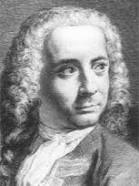
Bernardo Bellotto was a Venetian prodigy who literally inherited a legacy, being the nephew and pupil of the legendary Canaletto. In fact, he was so skilled that he often used his uncle’s famous moniker to sign his own works, leading to his nickname "il Canaletto" across Northern Europe. While he shared his uncle’s talent for the veduta (topographical view), Bellotto’s eye was more clinical and moody, favoring a cooler, more realistic light over the golden haze of Venice. His wanderlust took him from the canals of Italy to the royal courts of Dresden, Vienna, and Warsaw, where he became the court painter to King Stanisław August Poniatowski. His architectural views of Warsaw were so meticulously accurate that they were actually used as blueprints to rebuild the city’s historic center after the devastation of World War II—a testament to a brush that functioned with the precision of a drafting pen.
Stitching a Bellotto is a masterclass in perspective and structural detail. If you’re a fan of "gridding," this is your time to shine; his expansive cityscapes demand a perfectly aligned foundation to capture those towering spires and sweeping plazas. You’ll find yourself working with a sophisticated, muted palette—think stony grays, deep river greens, and the soft charcoal of shadows cast by 18th-century masonry. This isn't a quick weekend project; it’s a high-coverage marathon that rewards the patient stitcher. The challenge lies in the subtle color blending required to recreate his signature "cool" light, making it a truly stash-worthy endeavor for those who love the technical side of needlearts.
The emotional payoff comes as the miniature world begins to pop from your 14-count Aida. From the tiny, delicately rendered figures (or staffage) strolling through a Dresden square to the rippling reflections in a Polish river, the level of detail is staggering. You’ll find yourself using your finest tension control to ensure the architectural lines remain sharp and the transitions between sky and stone stay seamless. It’s a sophisticated, "thread painting" approach to urban life that turns a simple hoop into a window onto the Enlightenment. By the time you reach the final orts of your floss, you’ll have recreated a piece of history that literally helped rebuild a city.
Further Reading & Historical Context To see how his views of Warsaw aided in the city's reconstruction, explore the collections at the Royal Castle in Warsaw. You can also view his expansive European landscapes through the digital archives of The Metropolitan Museum of Art.