
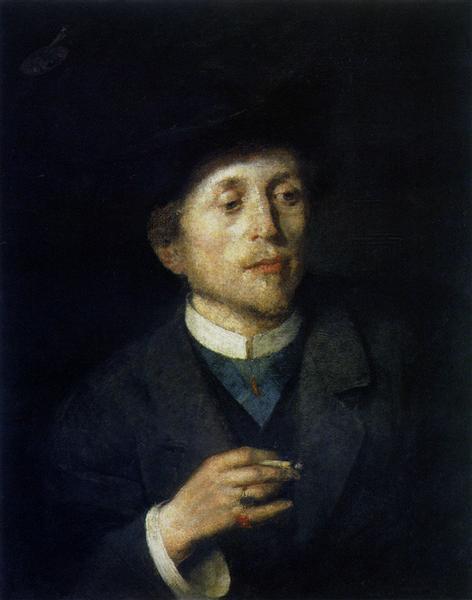
Anton Ažbe (1862–1905) was a seminal Slovenian painter and an influential educator who shaped the course of modern art in Central Europe. Moving to Munich in the late 19th century, he founded the private Ažbe School of Painting, which became a magnet for avant-garde artists, including the famous Wassily Kandinsky. While he did not rely on a single royal patron, he was highly regarded by the international art community for his revolutionary "Ažbe Principle"—the idea that color should be applied in pure, unmixed strokes to let the viewer's eye blend them. This technique placed him within the Academic Realism period with a distinct lean toward Impressionism. His most famous works, such as The Zamorc (The Moor) and The Half-Nude Woman, are celebrated for their psychological depth and masterful use of light and shadow. Translating an Ažbe painting into cross stitch is an exercise in color theory; his bold yet controlled use of pigment translates into rich, high-contrast needlework. Stitching his art allows you to experience the transition from classical portraiture to the vibrant energy of the modern era, one colorful stitch at a time.