
How to Track Your Cross Stitch Progress (9 Real Methods)
Posted by Tracey M. Kramer on 20th Mar 2018
A Note from Tracey Kramer
I've been stitching for over 30 years and I still lose my place sometimes—but only when I skip my tracking system. Here's everything I've tried and what I actually use today.
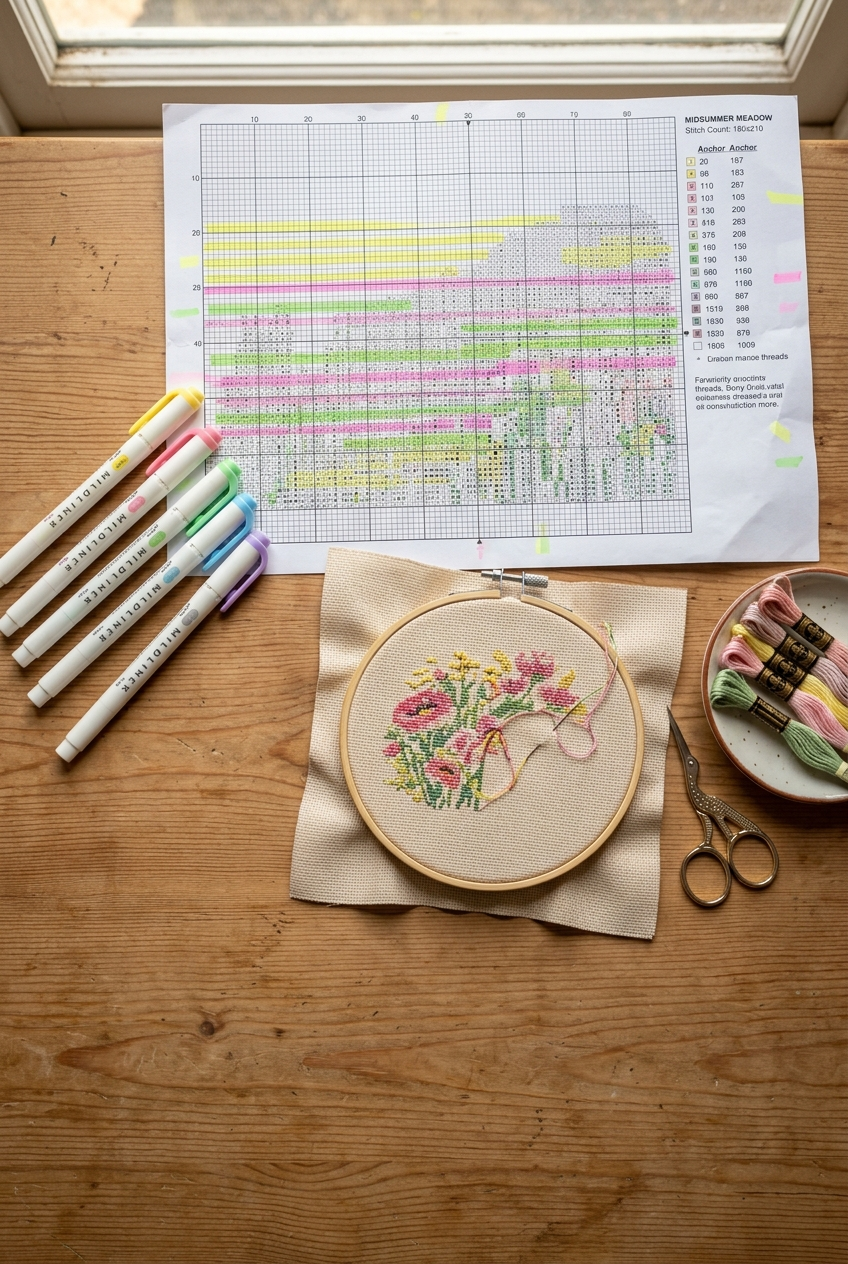
Overhead flat lay of cross stitch pattern with color-coded highlighted rows and highlighter pens on wooden table
By Tracey Kramer • • 12 min read
Let me ask you something honest: how many unfinished cross stitch projects do you have sitting in a basket somewhere? If you're like most stitchers I know, the answer is more than one. And if you think back carefully about why those projects stalled, I'd be willing to bet that a big part of it wasn't boredom or busyness—it was that you lost your place and didn't know how to pick back up again. That moment of confusion, where you're squinting at the pattern wondering where you left off and whether that row was stitched or not, is a project killer. It's quiet and unglamorous, but it ends more stitching journeys than anything else.
Tracking your progress isn't just a nice habit for the organized among us. It's a fundamental part of finishing what you start. Over the years I've tried just about every method out there—from color-coded highlighters to sticky note forests to phone apps—and I've formed real opinions about what works and what's more trouble than it's worth. So I want to walk you through nine legitimate methods stitchers use to keep track of where they are, what they've done, and where they're going next. I'll be straight with you about what I actually use and why, and I'll flag the pitfalls you might not see coming.
Whether you're a brand-new stitcher working on your first 5x7 or an experienced needle-wielder tackling a 300-color Heaven and Earth Designs canvas, you need a tracking system. The one you choose doesn't have to be mine—it just has to be one you'll actually use. Let's dig in.
Why Tracking Your Cross Stitch Progress Actually Matters
There's a trap that catches stitchers at every skill level, and it's called the checkerboard effect. If you stitch all of one color in neat 10x10 blocks without a reliable tracking method, you can end up with gaps between blocks that are nearly impossible to fill cleanly. The tension is different, the count is slightly off, and suddenly your beautifully planned project has a patchwork look you never intended. This is one of the main reasons I moved away from stitching in blocks years ago, and it's also why I'm so serious about having a tracking system that goes hand in hand with my stitching technique. Without tracking, you're not just risking a messy finish—you're risking the whole project.
Beyond the technical pitfalls, there's the simple human reality that life interrupts stitching. You put the hoop down to answer the phone and come back three days later. You stitch during a movie and realize you weren't counting as carefully as you thought. You hand the project to a friend to admire and then can't remember where the needle was when you get it back. Every one of those moments is an opportunity to lose your place, re-stitch something you already did, or skip something entirely. A good tracking method closes that gap. It gives you a clear 'you are here' marker so you can sit back down and stitch with confidence rather than spending twenty minutes re-orienting yourself.
There's also the psychological piece, and I don't think we talk about it enough. Large cross stitch projects can take months or even years to complete. If you have no visual record of progress, it can feel like you're stitching in place—putting in hours but seeing no movement. That feeling is a real threat to project completion. A tracking system, even a simple one, gives you evidence that you're moving. Seeing those highlighted rows marching across your pattern page, or watching a percentage counter tick upward in an app, does something good for your stitching morale. It reminds you that you are, in fact, getting somewhere—even when the project is so large it barely looks different week to week.
I'll be honest: when I was a younger stitcher I thought tracking was for people who couldn't just remember where they were. I was wrong about that. Experience doesn't make you immune to losing your place. It just means you've learned the hard way enough times to respect the system.
The Low-Tech Classics: Highlighters and Tape
The method I use every single day is highlighting my printed pattern with a physical highlighter. It's low tech, it's immediate, and it gives me a visual record I can glance at from across the room. When I stitch a line—or a section, depending on the pattern—I draw a line of highlight right across that row on the paper. When I sit down the next time, I can see exactly where I stopped without a moment of confusion. It sounds almost too simple to bother writing about, but I've seen so many stitchers skip this step and then struggle, so here we are.
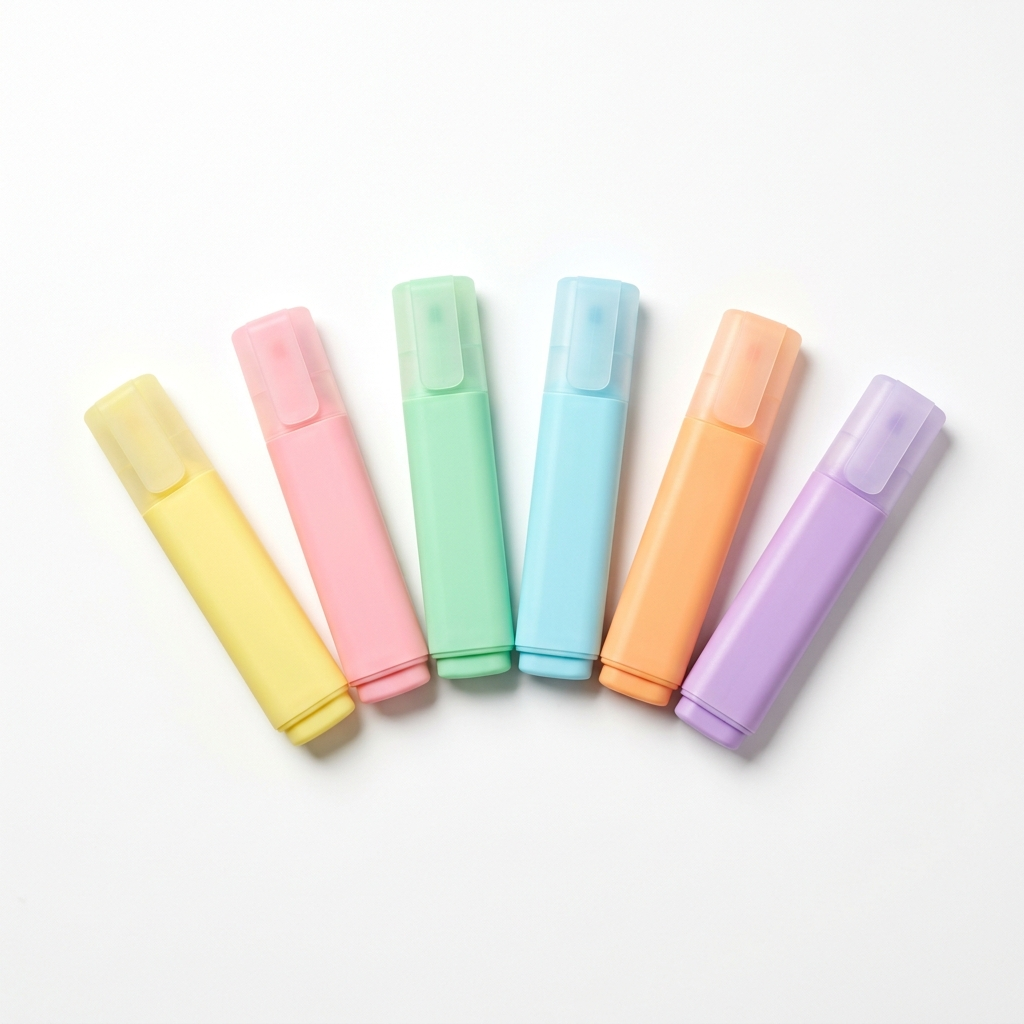
Now, not all highlighters are created equal, and this is one area where I genuinely believe in spending a little more for quality. I use Stabilo Swing Cool Highlighters because they check every box I care about. They don't bleed through the paper, which matters enormously when your pattern symbols need to stay legible. They don't dry out if you leave the cap off for a few minutes mid-stitch session—and trust me, you will do that. They have a snug cap that actually closes reliably, and the colors are bright enough to see at a glance without washing out your symbols. I've gone through many sets of these over the years. They are simply dependable. When one color runs out, I move to a different color and keep going—that shift in color also gives me a natural visual record of different stitching sessions, which I find oddly satisfying.
The alternate color approach is worth mentioning because some stitchers take it a step further: they color in each individual symbol using a different marker color every time there is a color change in the design. This means they're essentially recreating a color-coded map of the pattern on the printed page as they go. It's time-consuming, but if you're a stitcher who works primarily by color—stitching all of one thread color across the whole canvas before moving on—this method can be a real asset. You can see at a glance what's been done in each color and what still needs attention. It's not for me personally because I don't stitch that way, but I understand the appeal for the color-by-color crowd.
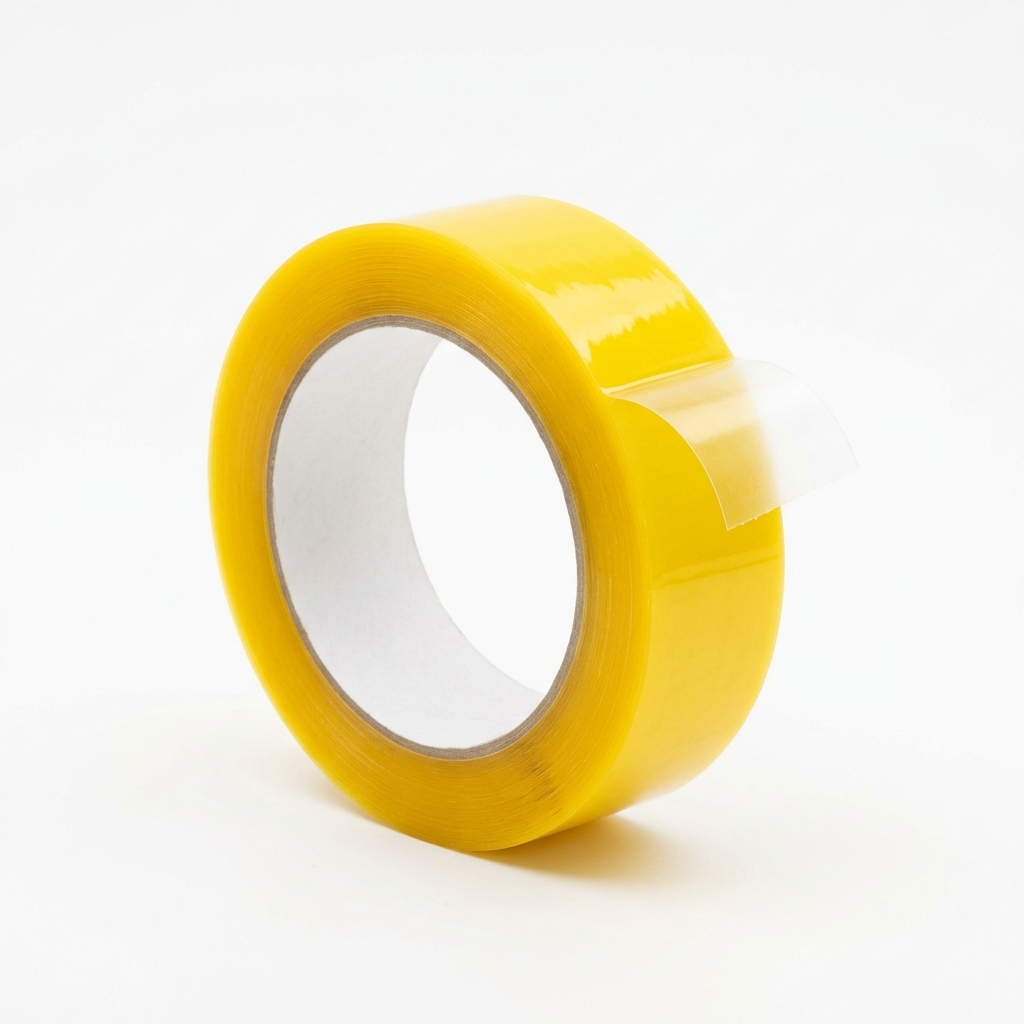
If you prefer something you can remove and reposition, highlighter tape (find on Amazon) is the tool you want. Products like Lee Products Highlighter Tape are transparent colored strips that cling to your pattern using static—no adhesive, no sticky residue, no tearing when you lift them. You slide the tape down the page as you complete each row, so it's always sitting right at your current working line. The symbols show clearly through the color, so you're never working blind. Yarn Tree also makes a well-regarded version of this static cling tape. I particularly recommend tape to stitchers who prefer to keep their patterns pristine or who might need to return or reprint them—highlighting with markers is permanent, and tape is not.
Tracey Recommends
Stabilo Swing Cool Highlighters – 8 Pack
These are the markers I use on every single project. They don't bleed through pattern paper, they don't dry out if you leave the cap off mid-stitch, and the colors are bright enough to see at a glance without washing out your symbols. If you're going to commit to row-by-row highlighting—and I think you should—get a good set of markers and these are them.
See on AmazonThe best tracking system is the one you will actually use. The goal isn't to do it right in some abstract sense—the goal is to finish the project in front of you.
The Parking Method as a Built-In Tracking System
Here's something I think gets overlooked in conversations about tracking: the parking method is itself a tracking system. When you park your threads—meaning you bring each color up at the exact spot where its next stitch will begin—your fabric is literally telling you where every color stands at any given moment. Those threads hanging down the front of your work are not chaos. They are a color-coded map of your progress. Every parked thread is a placeholder saying 'I was here, and I'll be back here next.' Once you understand that, the tangle-looking mess becomes something almost elegant.
I use the parking method in combination with my highlighter system, and together they give me complete confidence about where I am in any project. The highlighted pattern tells me which rows have been fully completed. The parked threads on the fabric tell me where each individual color is headed next. There is almost no way to lose your place when you're running both systems simultaneously. I know this sounds like a lot, but after a short while it becomes completely automatic—you don't think about it any more than you think about how you're holding your needle.
The parking method does require some upfront learning. If you've never tried it, it can look overwhelming the first time you see a project in progress—threads cascading down the face of the fabric in every direction. But I promise you it is a learnable skill, and once it's in your muscle memory it changes the way you stitch large or confetti-heavy projects entirely. I walk through the full technique in my guide The Parking Method in Cross Stitch if you want step-by-step instructions. It's one of the most-read articles on the Sunrays blog and I think that tells you something about how many stitchers are hungry for a better system.
One important thing to note: if you're going to use the parking method, you really do want to be doing row-by-row highlighting at the same time. Parking without a highlighted pattern can get confusing on complex designs because you can lose track of which rows have been fully resolved and which ones still have parked threads waiting to be picked up. The two systems strengthen each other. Together they are the most reliable tracking combination I know of for large counted cross stitch projects.
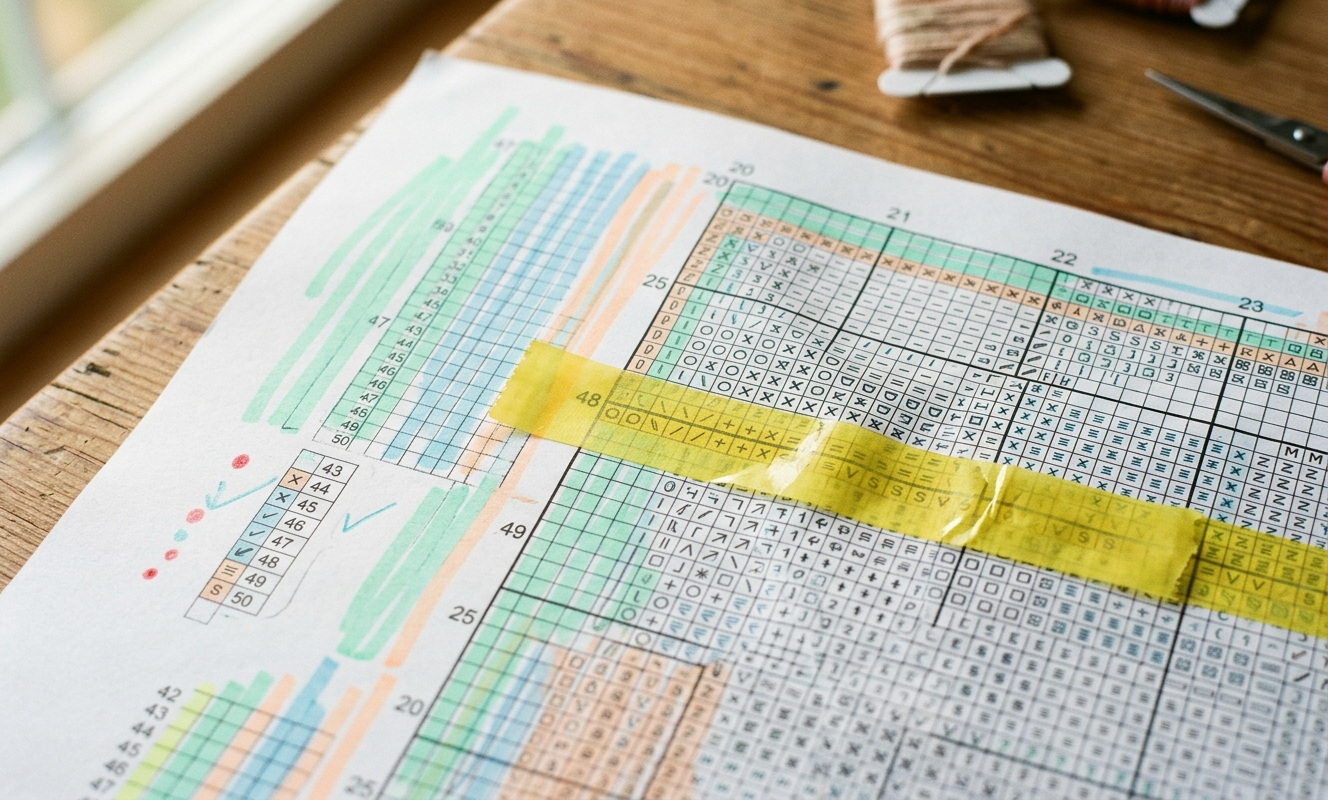
Close-up of cross stitch pattern page with Stabilo highlighter marks and repositionable tape strips tracking progress
Pattern Keeper: Digital Tracking for Serious Stitchers
If you're someone who gravitates toward technology, or if you've simply grown tired of paper patterns getting wrinkled, coffee-stained, or lost, then I want to tell you about Pattern Keeper—because it has genuinely changed how a lot of serious stitchers manage their projects. Pattern Keeper is a mobile app that lets you load a cross stitch PDF pattern directly onto your phone or iPad, and it does far more than just display the chart. It lets you mark off stitches as you go, zoom in on individual sections, manage your thread colors, and track your percentage of completion in real time. For stitchers working on large, complex designs, it's close to revolutionary.
Here's something I'm proud to tell you: Sunrays Creations is a listed compatible designer on the Pattern Keeper supported designers page at patternkeeper.app. The site specifically notes that charts from listed designers 'often work very well' with the app, and Sunrays is there alongside publishers like Ursula Michael and Heaven and Earth Designs. That's not an accident—I've worked to make sure my PDF patterns are formatted and structured in a way that plays nicely with Pattern Keeper. When you buy a Sunrays Creations pattern and load it into the app, you shouldn't run into the parsing problems that sometimes come with patterns that weren't designed with digital use in mind. That compatibility matters to me because I know how many of my customers use Pattern Keeper.
The way tracking works inside Pattern Keeper is worth describing, because it goes well beyond what a highlighter can do. As you complete each stitch or each row, you tap to mark it. The app keeps a running count of your completed stitches and shows you your progress as a percentage. You can set goals, note which thread colors you've used up, and pick up right where you left off even if you've been away from the project for months. There's no squinting at faded highlighter marks or wondering whether that row was done before or after you took a break. The app knows.
I'll say this with some love for the old ways: I still use physical highlighted patterns for a lot of my stitching. There's something tactile and satisfying about marking up a paper chart that a screen hasn't fully replaced for me. But for stitchers who are out and about, stitching in waiting rooms or on travel, a pattern keeper app is genuinely superior to hauling a binder of printed charts. And for very large projects with hundreds of colors—the kind where your printed pattern takes up thirty pages—having everything in one searchable, zoomable, progress-tracking interface is not a luxury. It's a practical necessity. If you haven't tried it yet and you have a large project in the queue, I'd encourage you to give it a look.
There are other stitching apps available beyond Pattern Keeper—the cross stitch and sewing app world has grown considerably—and some of them are free or available at minimal cost. If you want to browse what's out there, a quick search for cross stitch progress apps will surface several options. The important thing is to find one that's compatible with your pattern format, whether that's a PDF or an imported image. Not every app handles every file type equally well, which is one reason that Sunrays' tested compatibility with Pattern Keeper matters.
|
Patterns from the Sunrays Collection Tracey's Picks, designing cross stitch patterns since 2004 |
|||||
|
|||||
| Browse the full Sunrays collection → |


Printed Grids, Sticky Notes, Stitch Counting, and Photo Journals
Before apps and specialty tape, stitchers were stitching red thread grids directly onto their fabric before they ever started a project. The product most commonly associated with this technique is called Easy Count Guideline—red thread that you baste in a grid pattern across your fabric, creating visible reference lines that correspond to the grid on your pattern. It's genuinely helpful for reducing counting errors, because your eyes can match the grid on the fabric to the grid on the paper with much less mental arithmetic. The downside, and it's a real one for me personally, is the setup time. I am always too excited to start a new project to want to spend an hour threading red guides through my fabric first. If you're disciplined about preparation and you prefer a clean counting reference, it's a solid technique. It just requires patience I don't always have.
Sticky notes are another classic that I hear about frequently. The idea is simple: use sticky notes—different colors for different purposes if you like—to mark your current line, flag a confusing section, or note a thread color question you want to look up. It works. The problem is that a complex project can end up with so many sticky notes on the pattern that the notes themselves become hard to navigate. I've seen patterns that look like a bird built a nest out of Post-its, and actually reading the symbols underneath all of that paper becomes its own challenge. If you use sticky notes, keep it minimal—one strip to mark your current working line, and that's it.
Some stitchers are dedicated stitch counters. At the end of each stitching session they go back through their pattern, count the stitches they completed using the grid lines as guides, and log that number along with time spent. Over the course of a project they accumulate a detailed record of their stitching pace. I'll be honest: I do a rough mental count sometimes at the end of a good session, just to appreciate how much I got done. But I don't write it down. The logging feels like homework to me, and I'd rather spend that time with a needle in my hand. If you love data and find that numbers motivate you, though, stitch counting can be a powerful system—especially for estimating how much longer a project will take.
Photo progress journals are worth discussing, even if I have mixed feelings about them. Taking a photo of your project at regular intervals—daily, weekly, monthly—creates a visual timeline of your stitching journey. For small projects that grow visibly fast, this is genuinely rewarding. Watching a simple design fill in over a week of daily photos is charming and shareable. For large projects, though, weekly photos can be discouraging—the frame looks nearly identical from one week to the next, and that visual non-progress can eat at your motivation even when you've actually put in a lot of hours. I wouldn't rely on photos as your primary tracking method for anything larger than a 100x100 stitch design. Use them as a supplement—a way to celebrate milestones—not as your main orientation system. A cross stitch needle minder (find on Amazon) is a simple tool I use alongside all of this, by the way—it keeps my needle parked safely on the fabric when I step away, and prevents that moment of searching for a needle I set down on the arm of the chair and can't find. Small detail, but it matters.
You might also consider a project bag (find on Amazon) as part of your tracking ecosystem. When everything for one project—pattern, threads, fabric, needle, highlighters, sticky notes—lives in a single dedicated bag, you reduce the friction of picking back up after a break. You know immediately where everything is, and you're less likely to confuse materials from one project with another. Organization and tracking are closely related disciplines. A tidy, dedicated project setup doesn't replace a good tracking method, but it makes every tracking method work better. If you've never invested in a proper project bag for your cross stitch supplies, it's worth doing.
Get Stitching Tips & New Patterns from Tracey
Honest advice, new Sunrays designs, and occasional VIP-only offers. No fluff.
No spam. Unsubscribe any time.
Tracey Also Likes
Lee Products Removable Highlighter Tape
If you don't want to permanently mark your pattern—or if you're working on a chart you might need to reprint—this repositionable tape is the answer. It's transparent, so your symbols stay visible right through it. It clings without adhesive, lifts cleanly without tearing, and slides right down the page as you complete each row. A clean, elegant tracking solution.
See on AmazonChoosing the System That Actually Works for You
I want to say something clearly before we wrap up: the best tracking system is the one you will actually use. I could write a beautiful case for Pattern Keeper, but if you hate looking at screens while you stitch, it's not your system. I could argue passionately for Stabilo highlighters—and I will, because I love them—but if you're working on a rented pattern or a precious heirloom chart you can't mark on, tape is the smarter tool. The goal isn't to do it right in some abstract sense. The goal is to finish the project in front of you.
What I'd encourage is this: if your current method is a vague hope and a good memory, try adding one concrete tool this week. Put a set of highlighter pens (find on Amazon) within arm's reach of your stitching chair. Download a free app and load your current pattern. Grab a roll of highlighter tape. Just one thing, implemented now, will make a measurable difference in your ability to pick up and keep going without losing your place. Over time you'll find which combination of tools suits your pace and your project size, and you'll stop starting projects you don't finish.
If you're new to large projects and wondering where to even begin—never mind how to track—I wrote an article specifically about where to start a large cross stitch pattern that pairs well with what we've covered here. And if you have a drawer full of unfinished cross stitch projects and you're wondering how to get motivated to rescue them, I have thoughts on that too. Tracking isn't a cure-all, but I believe with everything in me that most UFOs—unfinished objects—become unfinished because the stitcher lost their place and never found their way back. Give yourself the tools to always find your way back.
Tracking your progress is one of those foundational habits that separates the stitchers who finish things from the ones who have a basket full of good intentions. Find your method, use it consistently, and give yourself the gift of always knowing exactly where you are. And when you're ready for a beautiful new project to track your way through, come browse the original counted cross stitch patterns at Sunrays Creations—every one of them is hand-charted and designed with the dedicated stitcher in mind.
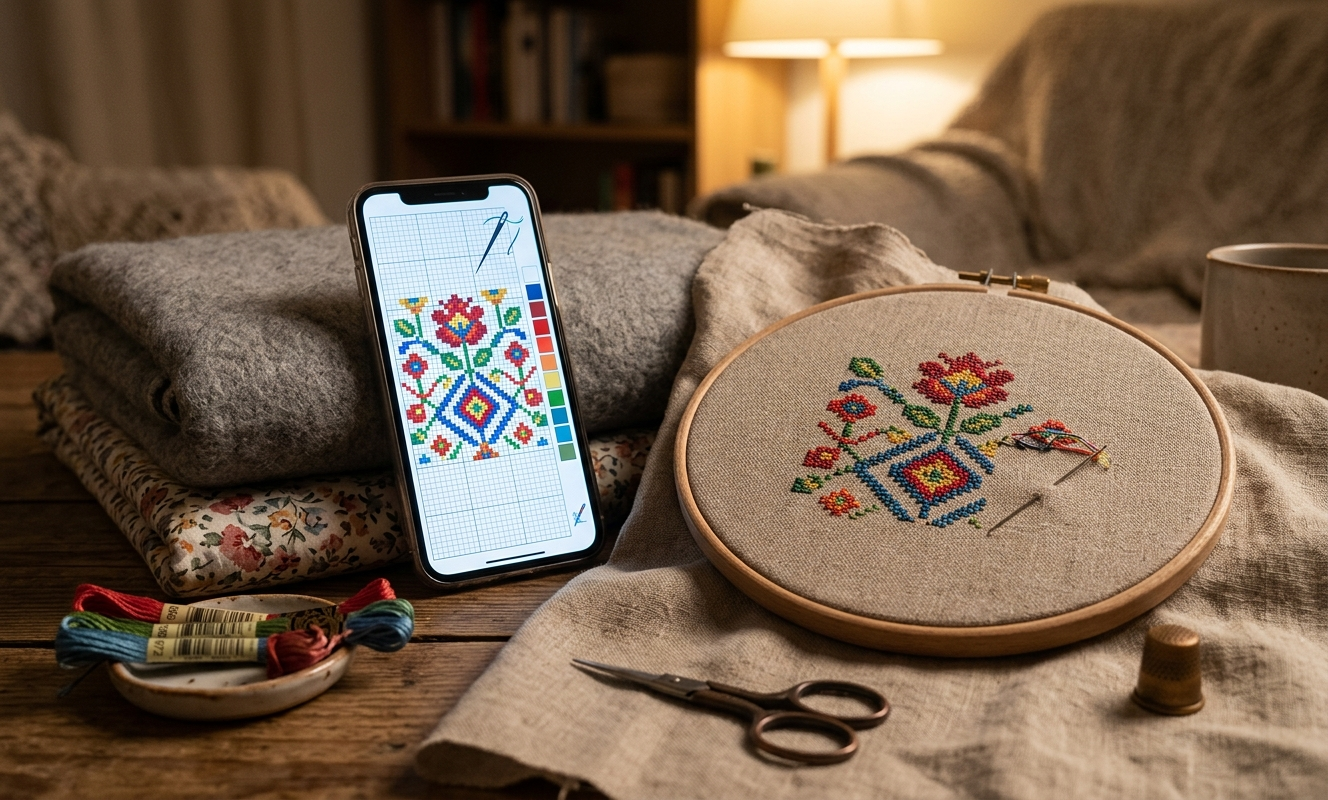
Smartphone showing digital cross stitch tracking app beside a hoop with stitching in progress on linen fabric
Keep Reading
The Parking Method in Cross Stitch
Parking your threads isn't just a stitching technique—it's one of the most reliable progress tracking systems you can use. Learn the full method step by step.
READ THE GUIDEWhere to Start a Large Cross Stitch Pattern
Before you can track your progress, you need to know where to begin. This guide walks you through finding your starting point on any large design.
READ THE GUIDEHow to Rescue Your Unfinished Cross Stitch Projects
Most UFOs stall because the stitcher lost their place. If you have abandoned projects waiting for you, this article can help you find your way back to them.
READ THE ARTICLEFrequently Asked Questions
What is the easiest way to track cross stitch progress?
Using a physical highlighter to mark off completed rows on your printed pattern is the simplest and most immediate method—it's what Tracey uses daily. See the highlighter section above for her specific product pick.
Can I use the parking method to track my stitching?
Yes—the parking method functions as a built-in tracking system because each parked thread marks exactly where that color needs to go next. Tracey combines parking with row-by-row highlighting for maximum confidence.
Is Pattern Keeper app compatible with Sunrays Creations patterns?
Yes. Sunrays Creations is a listed compatible designer on the Pattern Keeper supported designers page, and PDFs are tested for app compatibility. See the Pattern Keeper section for full details.
What is highlighter tape and how does it work for cross stitch?
Highlighter tape is a transparent, repositionable strip that clings to your pattern using static—no adhesive—so you can lift and reposition it without tearing the paper. Symbols remain visible through the tape.
Why do so many cross stitch projects end up unfinished?
Losing your place is one of the biggest reasons stitchers abandon projects—without a tracking system, picking back up after a break becomes confusing and discouraging. The article covers this in the opening section.
Are there free apps for tracking cross stitch progress?
Yes—many cross stitch tracking apps are free or very low cost. Pattern Keeper is one of the most feature-rich options and is compatible with Sunrays Creations PDFs, as covered in the digital tracking section above.
-- Tracey Kramer
Founder & Designer, Sunrays Creations Needlearts
Hand-charted designs since 2004 • Marysville, Ohio